A fashion brand, a jewelry store, and a supplement brand all behave differently during BFCM, and differently again once the sale ends.
Fashion shoppers chase drops and grab an extra item to hit a reward, then come back often if the first purchase landed well. Jewelry shoppers make one considered, often emotional purchase during the sale and may not return for months. Supplement shoppers use BFCM to stock up ahead of schedule, then settle back into the reorder cycle they were already on.
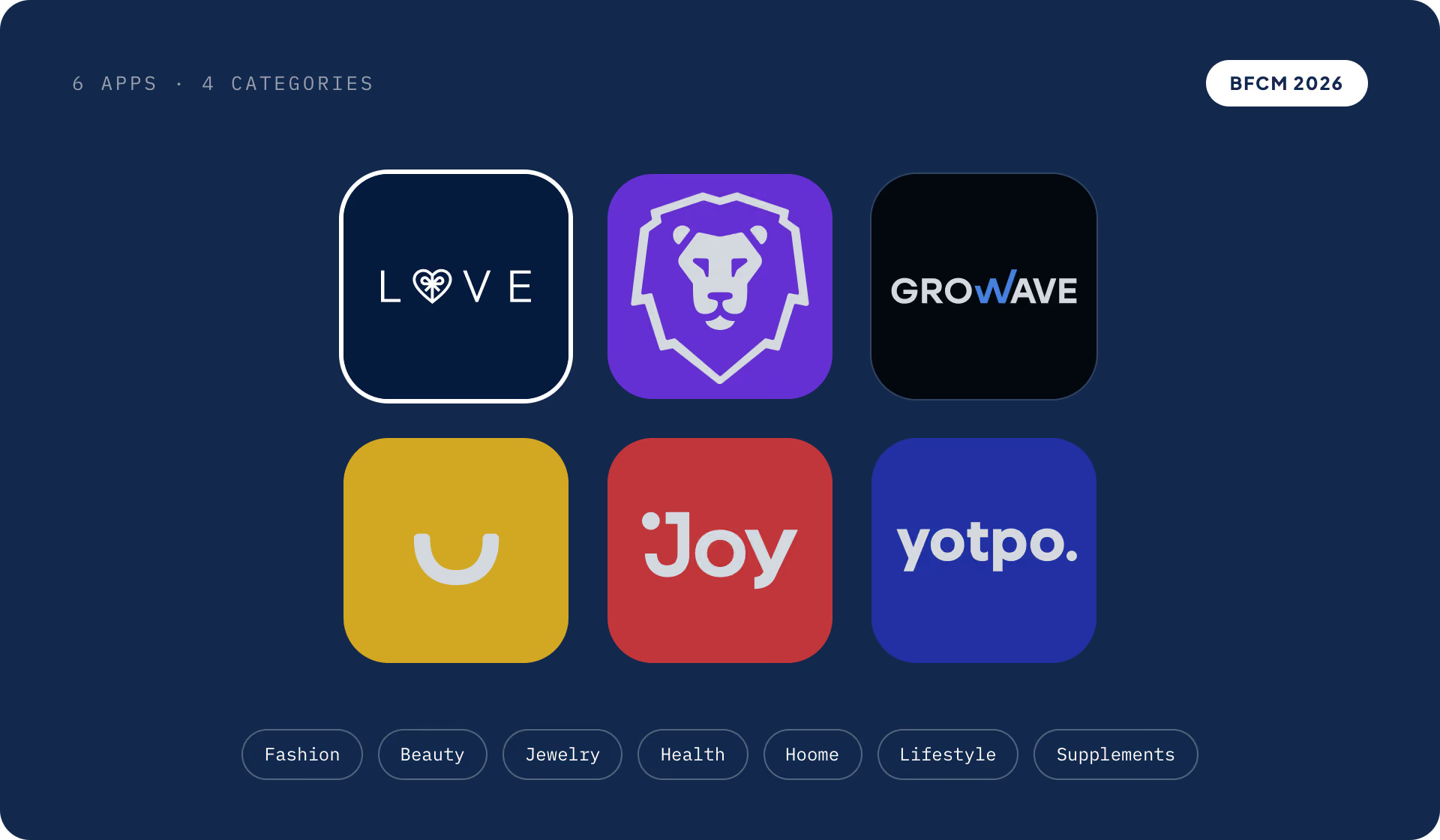
Because the behavior is different both during the sale and after it, the Shopify loyalty app that builds it should be different too. This guide walks through six store categories, what BFCM looks like in each one, and which loyalty features actually move the needle for that kind of buyer.
BFCM behavior splits into two parts: what happens during the sale, and what happens after it, and your category shapes both differently.
During the sale itself, AOV and impulse behavior decide what motivates the purchase, since a fashion shopper adding one more item to hit a reward tier is a different decision than a jewelry buyer choosing a single considered piece. Visible, easy-to-grab rewards convert well for the first kind of buyer, while the second kind needs a reward that feels proportional to what they're already spending, or it reads as an afterthought.
After the sale, purchase frequency decides how fast your loyalty program should expect that customer back. A skincare brand might see the same BFCM buyer again within six weeks for a reorder, while a jewelry store might not see them again for eight months, which means a points program that expires in 90 days quietly locks the jewelry buyer out of their own reward before they ever get the chance to use it.
Since BFCM loyalty design has to account for both the moment of purchase and the months after, that same logic applies to every category below.
How BFCM works in this category
What to prioritize
Ideal app strengths
Fashion stores see high BFCM traffic and trend-driven purchases, which pushes order volume up fast during the sale itself. After the sale, repeat purchases are common if the first experience lands well, so a loyalty setup launched before BFCM keeps paying off past the sale weekend.
Rubino, a Quebec footwear retailer running 28 stores plus its online shop, enrolls about 90% of its members in person through a lightweight POS widget, with benefits active immediately. Within 90 days, roughly 30% of Rubino's revenue came from paid members, who spent about three times as much as non-members.
Best loyalty app by order volume for fashion brands
Love Loyalty is built for exactly this mix of high traffic and status-driven buying: product pages show points earned per item, cart redemption takes two steps, and VIP tiers unlock on the Growth plan and above, so shoppers see and act on their rewards without leaving the buying flow. If your BFCM plan includes in-store selling on Shopify POS, that's included from the Professional plan onward.
How BFCM works in this category
What to prioritize
Ideal app strengths
Beauty and skincare buyers often stock up during BFCM itself, buying more of what they already use rather than trying something new. After the sale, that same customer finishes the product and needs more, often on a cycle you can predict, which is why referrals and post-purchase retention are worth more here than almost anywhere else.
Swederm, a Polish beauty brand, pairs points (1 per PLN spent, redeemable for free products) with a referral program that discounts both sides 20 PLN. Within two months, the program generated over $45,000, an 11.4% redemption rate, and 11% of total sales.
Best loyalty app by order volume for beauty and skincare brands
Love Loyalty is a strong match for beauty and skincare because referrals and points run together out of the box: the referral program is included on every plan including Free, so a beauty brand can layer it onto an existing points setup without upgrading, and Klaviyo integration for follow-up emails becomes available from Professional.
How BFCM works in this category
What to prioritize
Ideal app strengths
Jewelry and luxury buyers spend more per order and buy less often, so the purchase itself is considered, sometimes a gift, and usually emotional, which means a ten-point discount doesn't move someone who just spent $800 during the sale. After the sale, that same low frequency means the customer may not be back for months, so the reward has to carry weight on its own rather than rely on repeat redemption to feel worthwhile.
That's why VIP tiers and memberships outperform a plain points program here. A tier with real benefits, like early access to new collections, a birthday gift, or free shipping on every order, signals status, which is what a luxury buyer responds to. Paid memberships work well too, since the customer is already used to paying for something premium.
Best loyalty app by order volume for jewelry and luxury brands
For jewelry and luxury, the reason to reach for Love Loyalty is the status mechanics: both VIP tiers and paid memberships sit on the Growth plan and above, so a jewelry brand needs that tier, not the entry-level Professional plan, to build this kind of program.
How BFCM works in this category
What to prioritize
Ideal app strengths
Supplement and health buyers often use BFCM to stock up ahead of schedule, buying two or three months of product in one order rather than waiting for their usual reorder date. After that bulk order, the natural purchase cycle resumes, so the category is a strong fit for subscription-linked rewards and points that reward repeat orders specifically, not just any purchase.
Since the priority during BFCM is keeping redemption frictionless for a customer who's already used to ordering from you, every extra step between them and their reward costs you the reorder. Cart-level redemption in two steps and a visible points balance on the account page remove most of that friction on their own.
Best loyalty app by order volume for health and supplement brands
Love Loyalty fits health and supplement brands because it connects loyalty directly to the reorder cycle: the Professional plan and up integrates with Recharge and Shopify Subscriptions, so points tie into the same reorder rather than running as a separate system.
How BFCM works in this category
What to prioritize
Ideal app strengths
Home and lifestyle stores see average order value rise during BFCM itself as customers bundle items, so a flexible reward system that scales with cart size works better here than a flat discount. After the sale, purchase frequency drops back to the mixed, seasonal pattern typical of the category, and BFCM stands out as the biggest spike of the year within that pattern.
Because a home goods cart often has multiple items and multiple decision points, points visibility across the shopping journey matters most in this category. Bonus point campaigns tied to bundles can push a customer from a $60 cart to the next reward tier without discounting the whole order.
Best loyalty app by order volume for home and lifestyle brands
Love Loyalty covers what this category needs through its bonus campaign feature, which lets you run limited-time point boosts on bundles and is available from the Growth plan onward, matching the reward-stacking approach that works best for bundle-driven carts.
How BFCM works in this category
What to prioritize
Ideal app strengths
If your store sells across several categories, building six separate loyalty strategies isn't worth the effort. One simple system that works across all of them, with category-specific campaigns layered in later, covers more ground for less setup time.
Agradi, a Dutch equestrian brand with over 75,000 products across seven country storefronts, moved to a platform built for fast, simple redemption after its earlier tools proved too static or too costly to customize. The result: a 47% point redemption rate and 17% of sales driven by the loyalty program, with over a million customers migrated in the process.
Best loyalty app by order volume for general and multi-category stores
For a general or multi-category store, Love Loyalty's advantage is that the Free plan already covers points, two-step cart redemption, and referrals up to 150 orders a month, which is enough to test the setup before BFCM traffic pushes you past that volume and into Professional.
A few things hold true no matter what you sell, because they affect how quickly a customer can act on a reward rather than what that reward is.
Rewards need to be instantly understandable, since a customer won't stop to decode a program mid-purchase. Points should be visible before the purchase as well as after, so the incentive is part of the decision rather than a surprise at checkout.
Redemption should take as few steps as possible, because every extra step is a chance for the customer to abandon the cart. And the app itself has to hold up under BFCM traffic spikes, since a slow loyalty widget works against you as much as no loyalty widget at all.
Start configuring in September so there's room to test before traffic builds. Finalize your setup by early October, then go live by mid-to-late October and run a full test before your traffic peaks. BFCM 2026 falls November 27 through 30, so going live in October gives you a month of live data before the busiest week rather than a rushed launch during it.
Your store category shapes how customers buy during BFCM, and your loyalty program should match that behavior instead of working against it. Fashion rewards frequency, beauty rewards the cycle, jewelry rewards status, and general stores reward simplicity. Set it up early, keep the mechanics easy to understand, and let the category guide the details.
Buying frequency, average order value, and how long customers take to reorder differ a lot by category, so each of those changes what kind of reward actually motivates a purchase.
All of them can, but high-repeat categories like beauty and supplements tend to see the impact faster, since customers are back within weeks rather than months.
Memberships and tiered, high-value perks tend to fit better than small point discounts, since the reward needs to match the size of the purchase.
Yes, though they perform especially well in beauty, fashion, and lifestyle brands, where customers already talk about products with friends.
A single app can work across categories if you start with a simple, consistent setup, then layer in category-specific campaigns once the core program is running.
Aim to go live by mid-to-late October so you have time to test before the November 27–30 peak.