A store running 2,000 orders a month during BFCM can pay $79 for one loyalty app or $199 for another that does the same thing, and the difference has nothing to do with quality. It comes down to how each app structures its plans, where the order cap sits, and what features are actually included at that price, since features vary a lot from plan to plan too.
A plan that looks affordable in October can turn expensive fast once November orders start stacking up past its included cap, while a plan that looks pricier on paper can turn out to be the cheaper one once that same spike hits.
This guide breaks down what each app actually costs at the order volumes a store is likely to see during BFCM specifically, so you're comparing real numbers instead of sticker prices.
Comparing loyalty apps on base price alone misses the point. The real comparison is cost at your expected BFCM order volume against what that cost buys. A cheap plan that caps out mid-sale, or skips VIP tiers a merchant was counting on, can cost more in lost redemption and missed repeat purchases than a pricier plan that holds up through the whole weekend.
Most loyalty apps price on a base fee that includes a set number of orders a month, then an overage charge per 100 orders past that cap. A plan's real cost only shows up once you calculate it against your own BFCM volume rather than the number printed under the plan name. Some apps also flatten to a fixed price at their top tier, unlimited orders included, and that flat rate is where value can flip, since it can undercut a mid-tier plan's overage costs even though the sticker price looks higher at first glance.
The figures below come from each app's published pricing pages. Overage totals are calculated to show a plan's real cost at a given order volume, beyond the base price alone.
Pick the row closest to your expected BFCM order volume, then compare what each app costs to cover it.
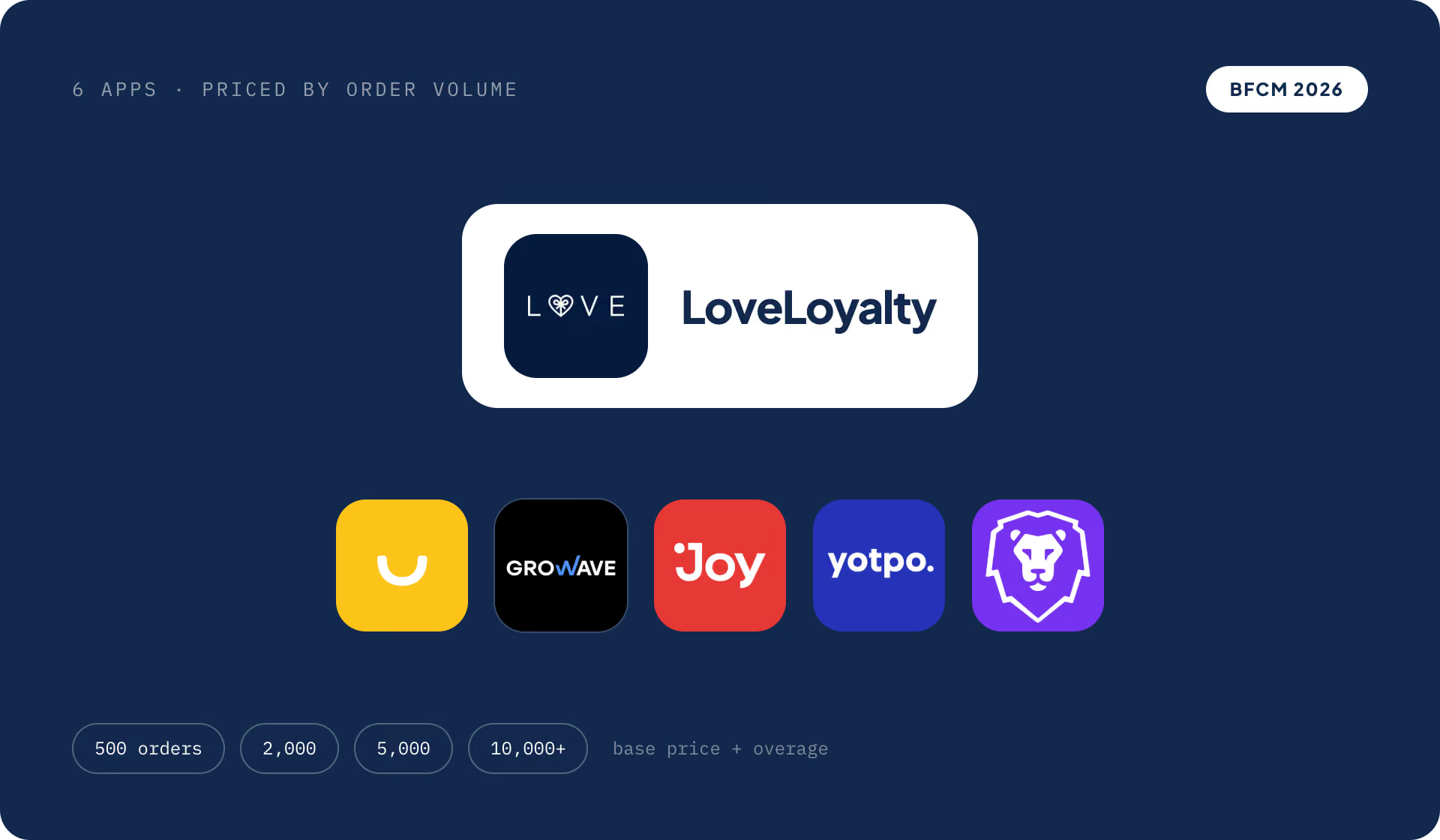
All four paid entry plans from Love Loyalty, Smile, Growave, and Joy land on exactly 500 orders a month, so the order cap doesn't separate them, only what's included does.
Best value for money: Love Loyalty at $12/mo, since it covers the fullest feature set of any paid plan at this volume, at a fraction of what Yotpo Pro charges for the same 500-order coverage.
This is the volume where VIP tiers and paid memberships start showing up across most apps, and it's also where the numbers stop lining up.
Best value for money: Love Loyalty at $79/mo delivers the same order cap and the same VIP tiers and memberships as Joy's $129/mo plan, which makes it the stronger value at this volume.
A BFCM spike is exactly when a mid-tier plan's overage rate starts to bite.
Best value for money: Love Loyalty Plus at a flat $399/mo, since it comes in under Joy's calculated $429/mo at this volume and removes overage risk entirely for any further BFCM spike, on top of the lower number.
At this volume, flat-rate pricing is worth more than the number suggests, since it removes overage risk entirely during a store's highest-traffic week.
Best value for money: Love Loyalty Plus at $399/mo, less than half of Growave's flat rate for the same unlimited-order coverage.
Judge a plan by its total cost at your expected BFCM volume: base price plus overage. Check overage terms before BFCM starts rather than discovering them on the invoice after, since they can double a plan's effective cost without warning. A cheaper plan that caps out mid-sale, or lacks a feature you need, ends up costing more in lost redemption than a pricier plan that holds up through the whole weekend. Annual pricing is worth comparing separately too, where it's available, since some apps discount 15-25% for annual commitment, which changes the math even at the same monthly headline price.
Start configuring in September so there's room to test before traffic builds. Finalize your setup by early October, then go live by mid-to-late October and run a full test before your traffic peaks. BFCM 2026 falls November 27 through 30, so going live in October gives you a month of live data before the busiest week rather than a rushed launch during it. Recalculate your expected order volume before choosing a plan, too, since your BFCM volume decides which plan is worth the money more accurately than your average month does.
The plan worth paying for is the one where the price buys something you'll use during BFCM. A cheaper plan that caps out mid-sale, or skips features you need, isn't automatically the better value just because it costs less upfront. Match the plan to your expected BFCM volume first, then compare what each option delivers at that number.
If you want help working out which Love Loyalty plan covers your BFCM volume without overage, you can book a demo and we'll run the numbers with you.
The published price doesn't change, but the effective cost often does, since BFCM order volume can push a store past its plan's included order cap and into overage charges.
Most apps charge overage per 100 orders past the included cap, though the rate and structure vary by app: some charge a flat per-100-order fee, while others (like Yotpo) use a declining per-order rate that changes at different volume thresholds. Check the exact structure for your app before BFCM rather than after the invoice arrives.
It depends on your expected order volume: entry-level plans typically cap around 500 orders a month, which many stores clear well before BFCM traffic even peaks.
Annual billing usually saves 15-25% where it's offered, so it's worth the commitment if you're already confident in the plan, though monthly billing keeps you flexible if you're still testing.
Match your expected BFCM order volume to a plan that covers it without heavy overage. The plan that costs the least at your actual volume is usually the better value, which isn't always the plan with the lowest base price.
Upgrade once your calculated BFCM order volume would push you into significant overage on your current plan, ideally with enough runway before October to test the new plan works as expected.
No. Overage rates and structures vary significantly by app, from a flat per-100-order fee to tiered rates that drop as volume increases, so the same order volume can cost very different amounts depending on which app and plan you're on.