You've come here comparing Yotpo and Love Loyalty because either you're picking a Shopify loyalty platform for the first time, or you have one already, and the monthly bill keeps growing as you scale, and the support isn't worth what you're paying for.
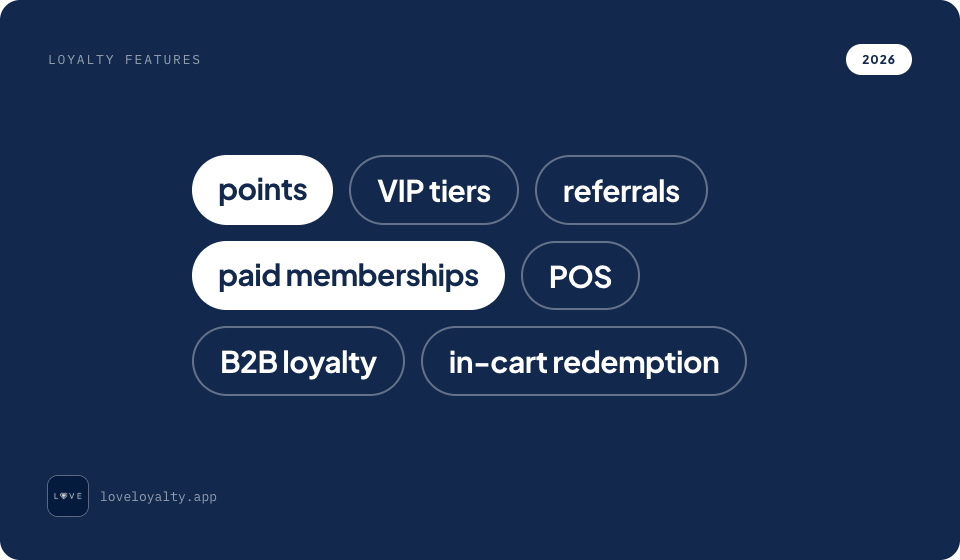
Yotpo and Love Loyalty both look fine on a Shopify loyalty app feature checklist and offer the same core loyalty features: points, VIP tiers, referrals, paid memberships, POS, B2B.
The real differences only show once you cross 500 orders/month, when pricing, user experience, performance, and operational headroom start to diverge.
This article walks you through how pricing between the two platforms compare at scale, architectural integration with Shopify, embedded vs. floating loyalty widgets, POS execution, and migration cost, and commits to a verdict at the end.
If you're a Shopify-exclusive brand that wants superior loyalty experience,, in-cart redemption, predictable pricing, Shopify-native architecture, and founder-level onboarding support, Love Loyalty is the better pick.
If your stack is anchored on Yotpo Reviews and contract consolidation matters more than user experience, Yotpo Loyalty has a case.
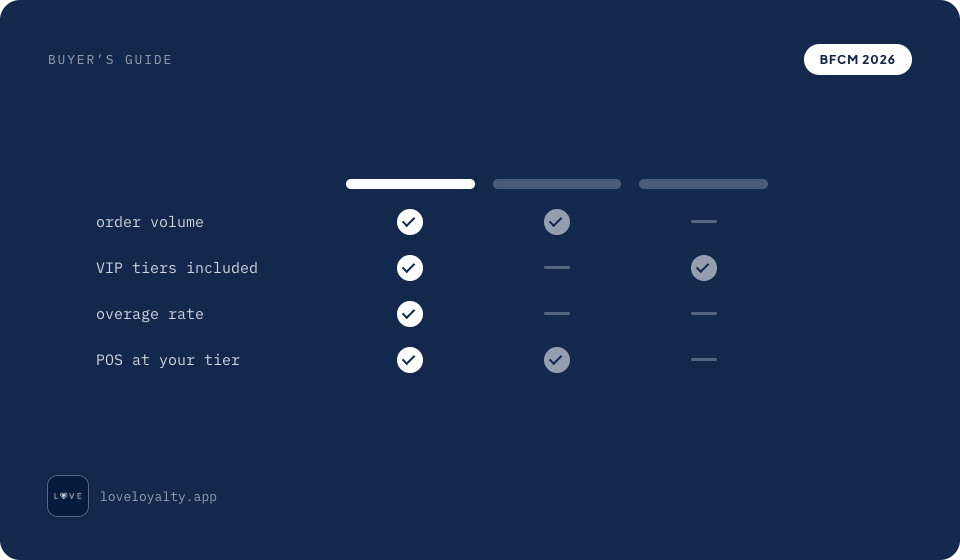
Before the deep dive, here's the comparison at a glance:
Every row deserves its own conversation. The rest of this article is that conversation.
This comparison is built on three key inputs.
If you're earlier in the evaluation process, the 5 best Yotpo alternatives roundup covers the broader market context this comparison sits inside.
Love Loyalty is built exclusively for Shopify. Yotpo serves Shopify alongside BigCommerce, Magento, and Salesforce Commerce Cloud. That single architectural choice cascades into everything else in this comparison: pricing, UX, performance, and how fast you can ship a custom feature.
A multi-platform tool has to stay portable. It can't take hard dependencies on Shopify metafields, checkout extensions, POS, or Hydrogen because the same codebase has to render on Magento next week. Love Loyalty takes those dependencies on purpose, because no other platform is pulling the roadmap in a different direction.
The implementation experience reflects this. With Love Loyalty, one of the three founders runs your onboarding personally. Yoggies migrated over 100,000 customers with point balances and tier status preserved. Agradi got custom features built before most CSMs would have scheduled a kickoff call. Yotpo assigns a Customer Success Manager, and Shopify App Store reviews are mixed: strong praise for individual reps sitting next to complaints about email response delays beyond 3 days and dismissed feature requests.
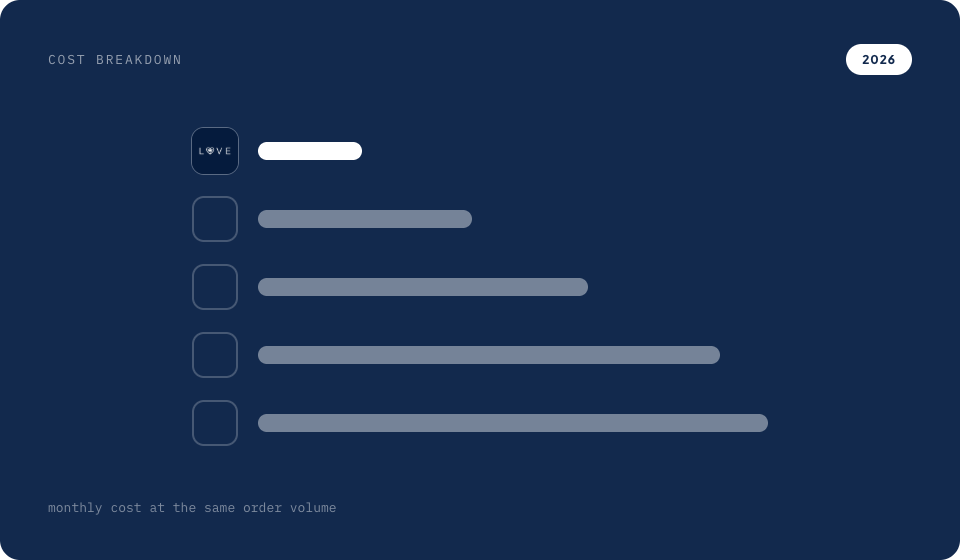
Yotpo's paid Loyalty tier starts at $199/month for 500 orders. Love Loyalty starts at $12/month for the same volume. The gap widens as you scale.
Two mechanics make the Yotpo bill grow faster than the headline number suggests.
Modular billing. Yotpo Reviews and Yotpo Loyalty are billed as separate products. A brand running both starts at ~$278/month minimum ($79 Reviews + $199 Loyalty) before any overages.
Overage charges. Yotpo charges roughly $0.20 per order beyond your tier cap. Love Loyalty charges $0.15 per order ($15 per 100). Small per-unit gap, but it compounds.
Run the math on a Shopify brand doing 10,000 orders/month. After overages and tier upgrades, Yotpo Loyalty alone lands around $1,000–$1,200/month, or roughly $14,000/year. The same brand on Love Loyalty's $399/month Premium plan with unlimited orders runs ~$4,800/year. That's a $9,000+ annual delta for the same volume of loyalty transactions.
Love Loyalty embeds loyalty natively across 20+ Shopify storefront placements. Yotpo's default UX leans on floating launcher widgets, the tab in the bottom-right corner of the page that pops open an overlay panel on click. This is the single biggest UX divergence between the two platforms.
Launchers are easier to deploy. Drop a script, pick a corner, ship. But customers have to actively click to engage. If a shopper doesn't notice the "Rewards" tab or doesn't think to click it, the loyalty program goes invisible exactly when it should be doing the most work. Every time I've audited a Shopify storefront running a floating launcher, the data tells the same story: a small group of power users find it and use it heavily, while most customers never click.
Embedded widgets are the opposite trade. They require theme integration, but on Love Loyalty that work happens during setup, handled by the founders, not the merchant. Once embedded, loyalty becomes part of the buying flow:
The flagship UX move is in-cart 1-click redemption. Customer adds product, opens cart, sees redeemable points, taps once, discount applied, checks out. No coupon code, no popup, no claim-your-reward intermediary screen. Agradi switched from Loyalty Lion to Love Loyalty specifically for this flow and hit a 47% redemption rate after migration.
Mobile makes the launcher problem worse. On a 6-inch screen, floating widgets cover content. Embedded widgets reflow into the theme. If half your traffic is mobile, which for most DTC brands it is, embedded compounds in your favor.
Love Loyalty stores all data in Shopify metafields. Yotpo runs on external infrastructure with API calls back to Shopify. This architectural split has real performance implications.
Shopify's data model has a built-in concept called metafields: extra data attached directly to customers, products, and orders. Love Loyalty stores point balances, tier status, redemption history, and membership data there. No external database to query, no extra round-trip on every page load.
Yotpo's model is the standard multi-platform SaaS approach: customer data syncs to Yotpo's database, widgets call Yotpo's APIs to render, scripts inject after the initial paint. It works, but every product page load that needs to show a points value involves an external API call.
This matters for Core Web Vitals, Google's page-experience metrics that Shopify uses in search rank. Largest Contentful Paint (how fast the main content becomes visible) correlates directly with conversion across DTC benchmarks. Widgets that wait on an external API call can delay LCP or shift layout during render. Native widgets loading from metafields don't.
There's a privacy angle too: customer data stays in Shopify, which means fewer data processing agreements to sign under GDPR and CCPA.
Both platforms ship points, referrals, VIP tiers, paid memberships, Shopify POS, and B2B loyalty. The execution differs in three places that matter.
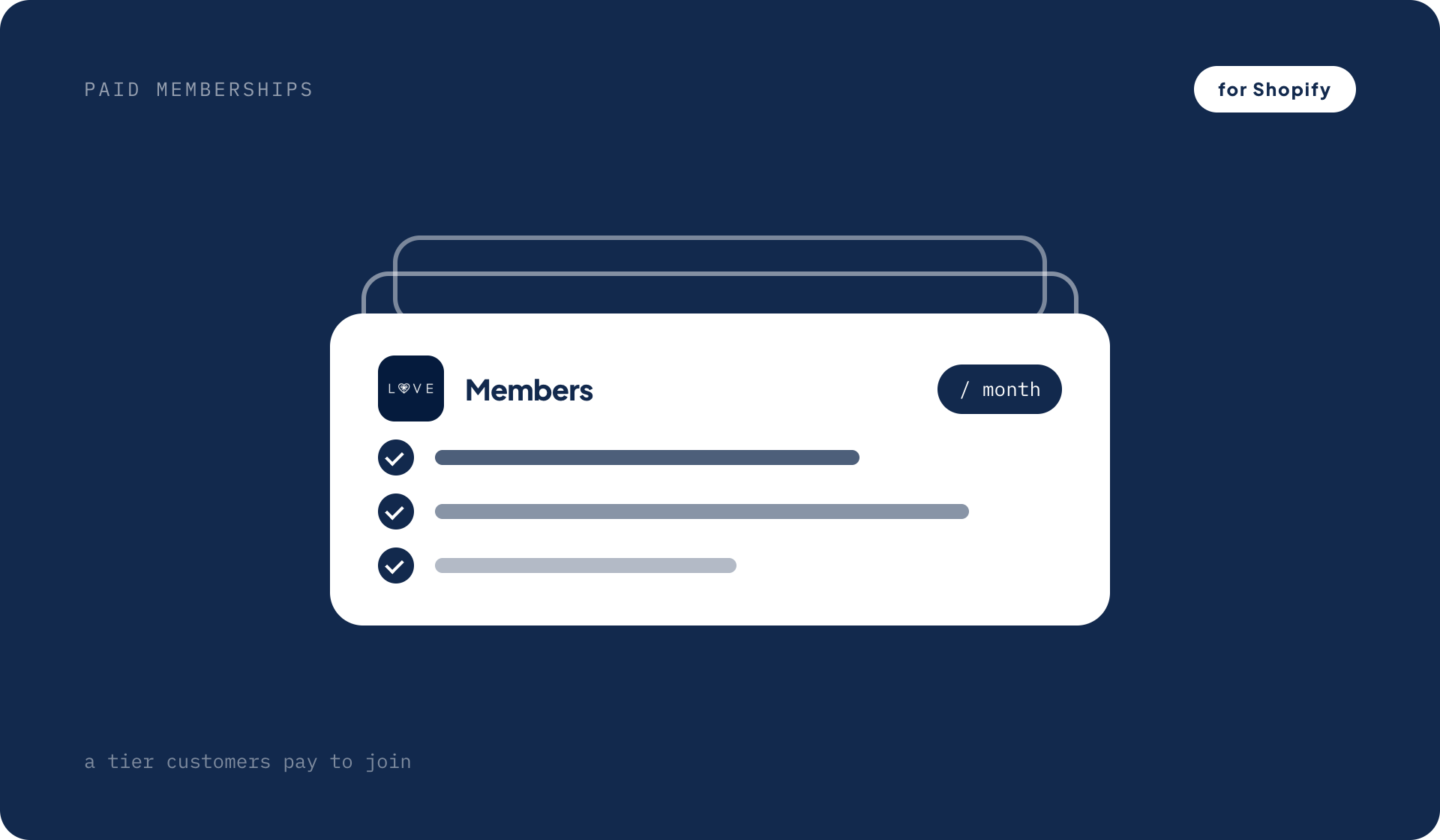
Paid memberships. Yotpo offers a yearly paid membership earning rule on its Gold, Platinum, and Enterprise plans. Customers buy a membership product, get assigned to a paid VIP tier for 12 months, then repurchase to renew. Love Loyalty offers annual or recurring memberships with auto-renewal, plus a feature that doesn't exist anywhere else: a one-click membership upsell at checkout that applies benefits to the same order.
Here's how that plays out. A non-member at checkout sees: "Add Big Chunks Club for $20/year, get 10% off this order and every future order." If they tap yes, the membership is added and the discount applies to the order they're currently on. The membership pays for itself on the upsell purchase. Rubino used this exact mechanic to drive $630,000 in member revenue in 90 days, with ~30% of total revenue coming from paid members.
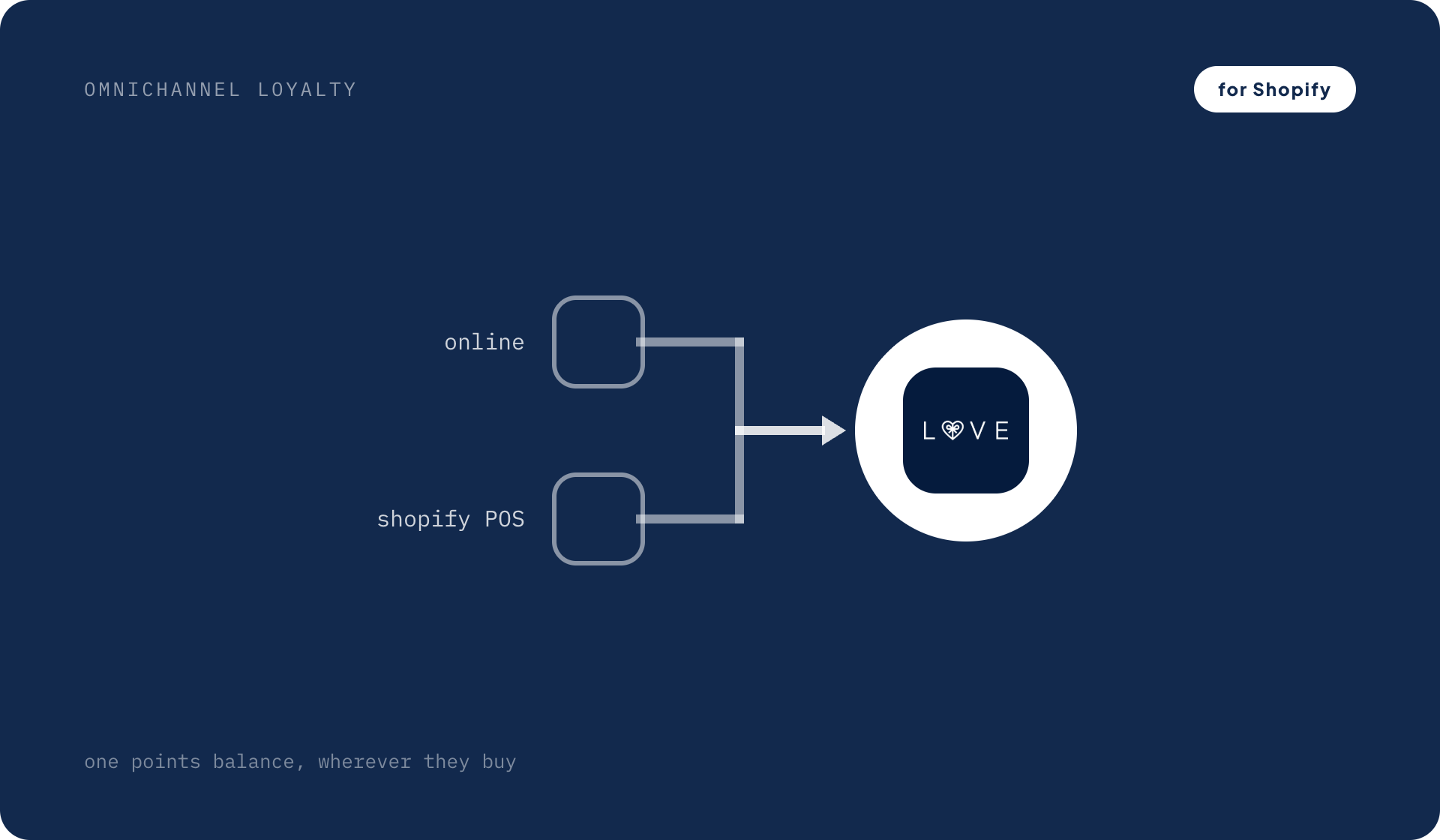
Shopify POS. Yotpo shipped a POS-compatible extension in early 2025 after Shopify launched POS 10.0. It works. Love Loyalty's POS workflow is built around a lightweight in-store enrollment widget designed for sub-30-second enrollment at the counter. Counter speed matters because in-store loyalty fails at operations, not technology: if enrolling a customer takes 45 seconds and there's a queue behind them, the cashier skips it. Félix & Norton's "Big Chunks Club" sells most of its memberships in-store via a single POS tap.
B2B loyalty. Both support it. Yotpo positions B2B as a CSM-led custom engagement; Love Loyalty extends its native points, tiers, and membership stack to wholesale customers using Shopify's B2B infrastructure, with the same widgets and data model as the consumer side.
Both platforms ship native loyalty reporting: revenue attribution, cohort analysis, redemption rates, tier movement. The strategic difference is what each one tries to do beyond loyalty.
Yotpo bundles lifecycle marketing automation into the loyalty product. Love Loyalty deliberately doesn't. Instead, it pipes 15+ loyalty events into Klaviyo for flow triggers and full segment access. "VIP tier upgraded," "points expiring," "first redemption" all become Klaviyo triggers, and loyalty data sits inside Klaviyo segments for personalized email and SMS.
The honest trade: if you want lifecycle automation inside the loyalty platform, Yotpo offers more there natively. If you already use Klaviyo or Attentive, which most Shopify brands do, Love Loyalty's native ESP integration is the better setup.
My preference: best-in-class loyalty plus best-in-class ESP, rather than two mediocre tools doing both jobs from one budget..
Pick Love Loyalty if you're Shopify-exclusive and want embedded loyalty UX, predictable pricing at scale, metafield-native architecture, and founder-led onboarding. The $9,000+ annual delta at 10,000 orders/month funds a lot of other retention work.
Pick Yotpo Loyalty if you're already running Yotpo Reviews and contract consolidation matters more than UX depth, or your stack spans Shopify alongside BigCommerce, Magento, or Salesforce Commerce Cloud and you need one loyalty tool across platforms. Bundled billing and a single CSM relationship have real operational value for finance and procurement teams managing renewals.