
Updated 19 November 2026. Ratings, review counts and prices checked 19 November 2026.
If you've been looking for ways to bring customers back to your Shopify store, you've probably come across loyalty apps. These tools reward customers for every purchase, turn one-time buyers into regulars, and give shoppers a reason to pick your store over the next one. But with so many options on the Shopify App Store, how do you know which one fits your store?
Don't worry, we'll walk you through it step by step, so you can find the loyalty app that matches your goals, your order volume and your budget.
Why a Loyalty Program Matters for Your Shopify Store
Understanding why a loyalty program is worth it will help you see the big picture, and why it deserves a place in your store.
1. More Repeat Purchases
A loyalty program gives customers a reason to come back to you instead of shopping around.
- Why It Matters: Returning customers spend more over time than first-time buyers. Increasing retention by just 5% can lift profits by 25% to 95%, which makes repeat purchases one of the strongest levers you have.
- How It Works: Every order earns points that customers can only redeem at your store. The next purchase starts with a reward already waiting, so coming back feels like the obvious choice.
2. Lower Customer Acquisition Costs
Winning a new customer costs around five times more than keeping one you already have.
- Why It Matters: Every repeat order is revenue you don't have to buy again through ads. As ad costs climb, keeping existing customers becomes the cheaper way to grow.
- How It Works: Points reminders, tier upgrades and birthday rewards bring customers back through email and on-site prompts, so you spend less on paid channels to fill the same number of orders.
3. Higher Average Order Value
Customers close to a reward or a tier upgrade often add one more item to reach it.
- Why It Matters: A bigger basket means more revenue per order without needing extra traffic. Small increases in order value add up quickly across thousands of orders.
- How It Works: Show the points each product earns on the product page and the points needed for the next reward in the cart. Customers can see exactly what one more item unlocks.
4. Better Customer Insights and Data
Every point earned and every reward redeemed tells you something about how your customers shop.
- Why It Matters: The more you know about your customers, the better you can serve them. First-party loyalty data keeps working even as third-party tracking gets weaker.
- How It Works: Loyalty analytics show lifetime value, redemption rates and repeat purchase rates, so you can see which rewards actually bring customers back and adjust your program accordingly.
5. Word-of-Mouth Growth
Happy customers already recommend you. A referral program gives them a reason to do it more often.
- Why It Matters: Referred customers arrive with trust already built in, which makes them easier and cheaper to convert than cold traffic.
- How It Works: Referral links reward both the referrer and the new customer, so each side has a reason to complete that first order.
6. Better Marketing Opportunities
A loyalty program gives you a steady stream of personal reasons to reach out.
- Why It Matters: Messages about a customer's own points balance or tier status stand out from generic promotions, and they get opened.
- How It Works: Loyalty apps connect with Klaviyo and other email tools, so points balances, tier status and expiring rewards show up in the flows you already send.
7. One Program Online and In-Store
If you sell in person, customers expect their points to follow them to the counter.
- Why It Matters: Separate online and in-store programs split one customer into two records and two experiences.
- How It Works: Shopify POS integration lets customers earn and redeem in store, and Apple and Google Wallet passes put their points balance right on their phone.
The Key Features to Look for in a Loyalty App
Here's a closer look at the how of choosing the features that matter for your store:
- Native Shopify experience and speed: A slow loyalty widget slows down the pages that make you money. Choose an app that stores loyalty data in Shopify metafields, so widgets load instantly with the page instead of waiting on an external API.
- Points and rewards across your store: Customers only chase rewards they can actually see. Show points on product pages, in the cart and in customer accounts, and let customers redeem them without a discount code to copy.
- VIP tiers and paid memberships: Status and perks give your best customers something worth protecting. Set automatic tier upgrades based on spend, and offer a paid membership with member pricing and free shipping for your most loyal shoppers.
- Integrations: Loyalty data is most useful inside the tools you already use. Make sure the app connects with Klaviyo, Shopify Flow and Shopify POS, so points and tiers show up in your emails and at the counter.
- Analytics and reporting: Data-driven decisions help you fine-tune rewards and grow. Track lifetime value, redemption rates and repeat purchases, then adjust your point values and rewards based on what is working.
Top Loyalty Apps for Shopify
Here are some of the best loyalty apps for Shopify to consider, based on their features, ease of use and pricing.
1. LoyaltyLion
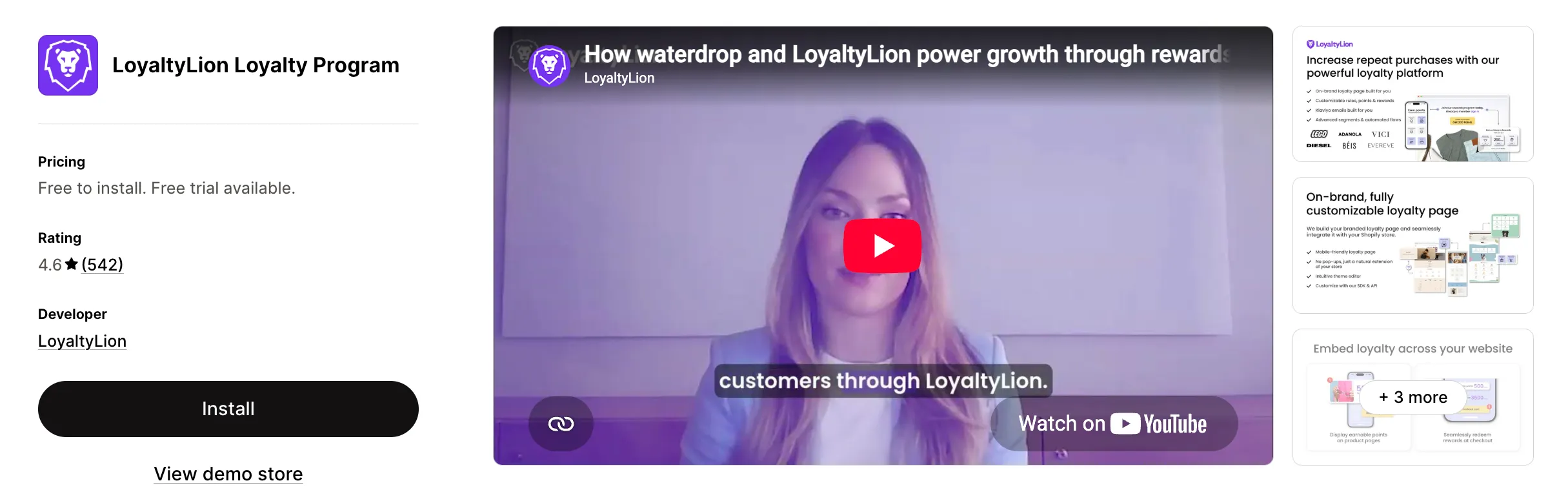
Why It's Perfect: LoyaltyLion is a strong fit for mid-market brands that want a guided, sales-led setup. Every paid plan comes with an onboarding manager, built-in CLV and RFM analytics, and API access, so larger teams can shape the program around their own data.
Pricing (as of 19 November 2026)
LoyaltyLion has a free plan for up to 400 orders. Its Classic plan costs $199/month for 500 orders and $349/month at 2,000 orders, because the price rises with your average monthly orders instead of a fee per extra order, and VIP tiers are a paid add-on at a custom quote. Advanced is a custom quote that includes VIP tiers, bonus campaigns and points on product pages, while Plus adds Automated LoyaltyLion Flows, AI campaigns and post-launch optimization.
2. Toki Loyalty
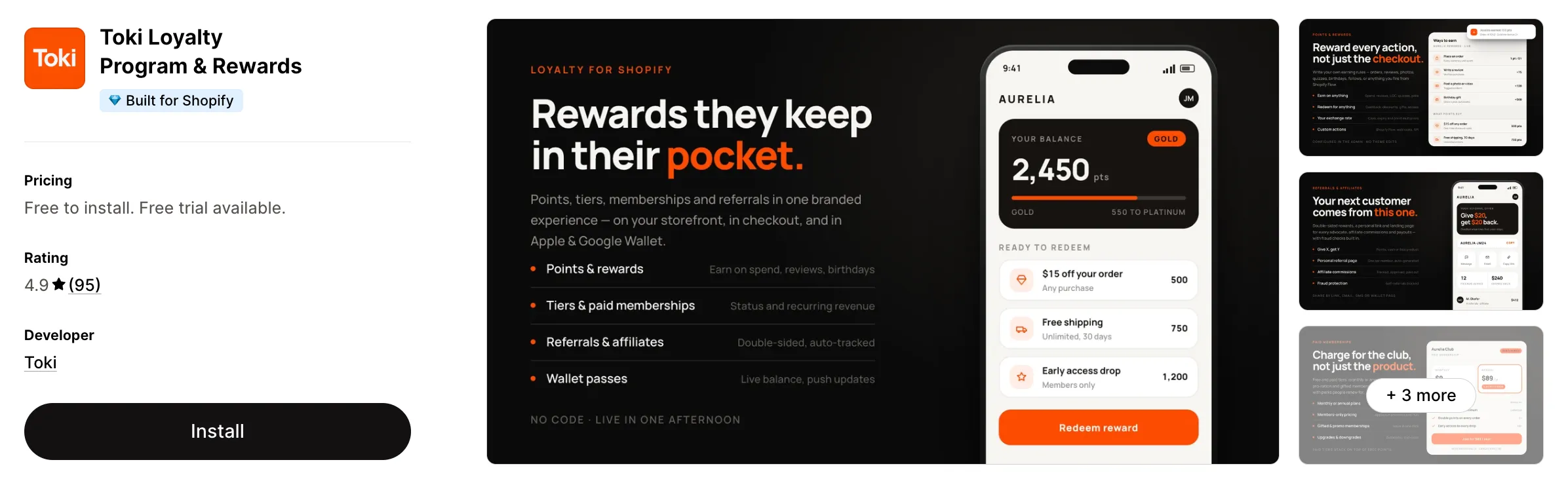
Why It's Perfect: Toki Loyalty works well for brands that sell through more than one Shopify store. It offers 50+ ways to earn, rewards as points, store credit or cash back, and one loyalty program with unified gift cards across multiple storefronts.
Pricing (as of 19 November 2026)
Toki Loyalty offers three paid plans: Pay as You Go at $49/month for 1,000 orders, Growth at $299/month for 3,000 orders, and Power at $599/month for 5,000 orders. Orders above each plan's volume cost $0.15 each, and stores above 5,000 orders get custom Enterprise pricing.
3. Love Loyalty
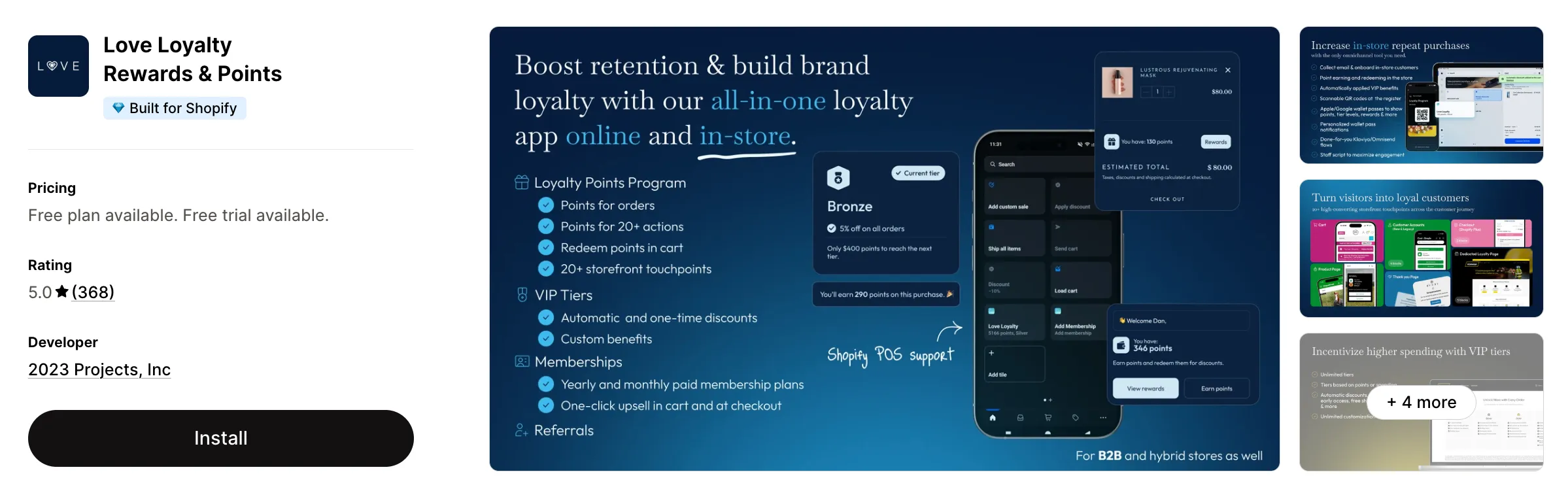
Why It's Perfect: Love Loyalty is ideal for fast growing and Shopify Plus brands that want every loyalty program in one app that feels native to Shopify. Points, VIP tiers, paid memberships, referrals, POS, Klaviyo flows, Apple and Google Wallet passes and B2B loyalty all live in a single install, and since loyalty data sits in Shopify metafields, widgets load instantly with the page.
Features:
1. Native Shopify Speed: Points balances and tier status live in Shopify metafields, so 20+ loyalty widgets render with the page instead of waiting on an external API.
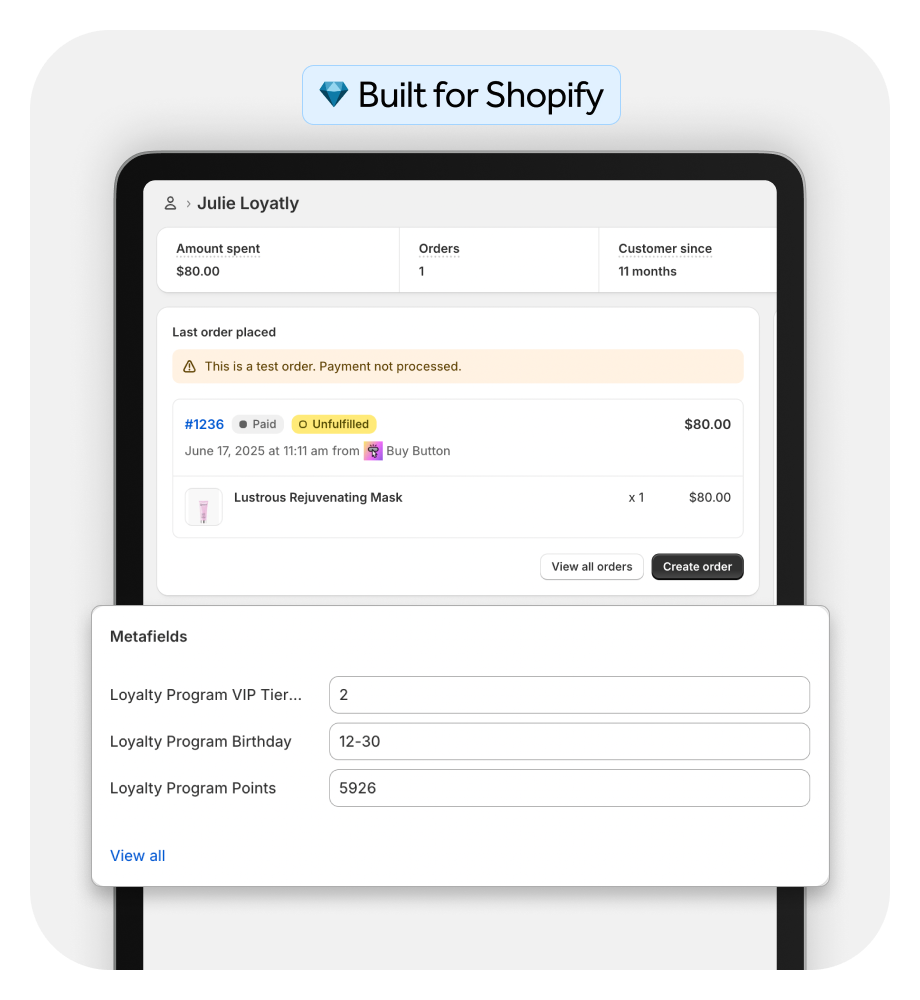
2. Points and Redemption in the Cart: Customers see what each product earns on the product page and redeem points in the cart, with no discount code to copy.
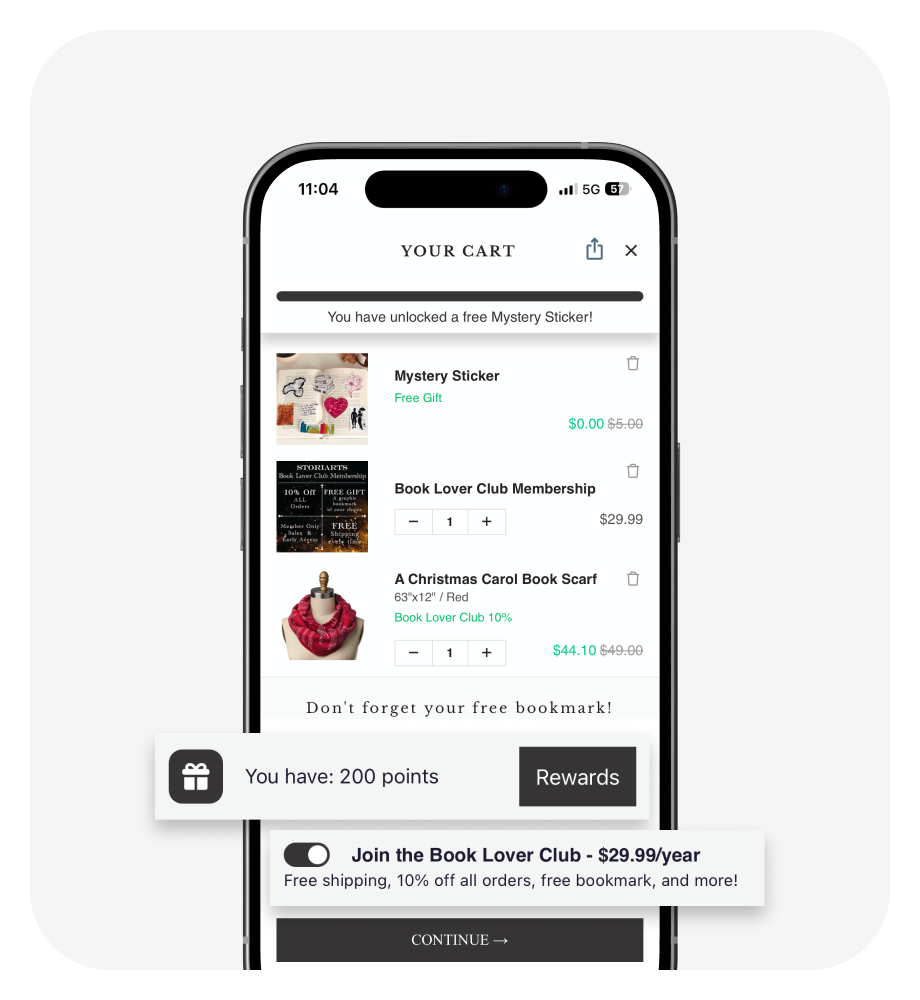
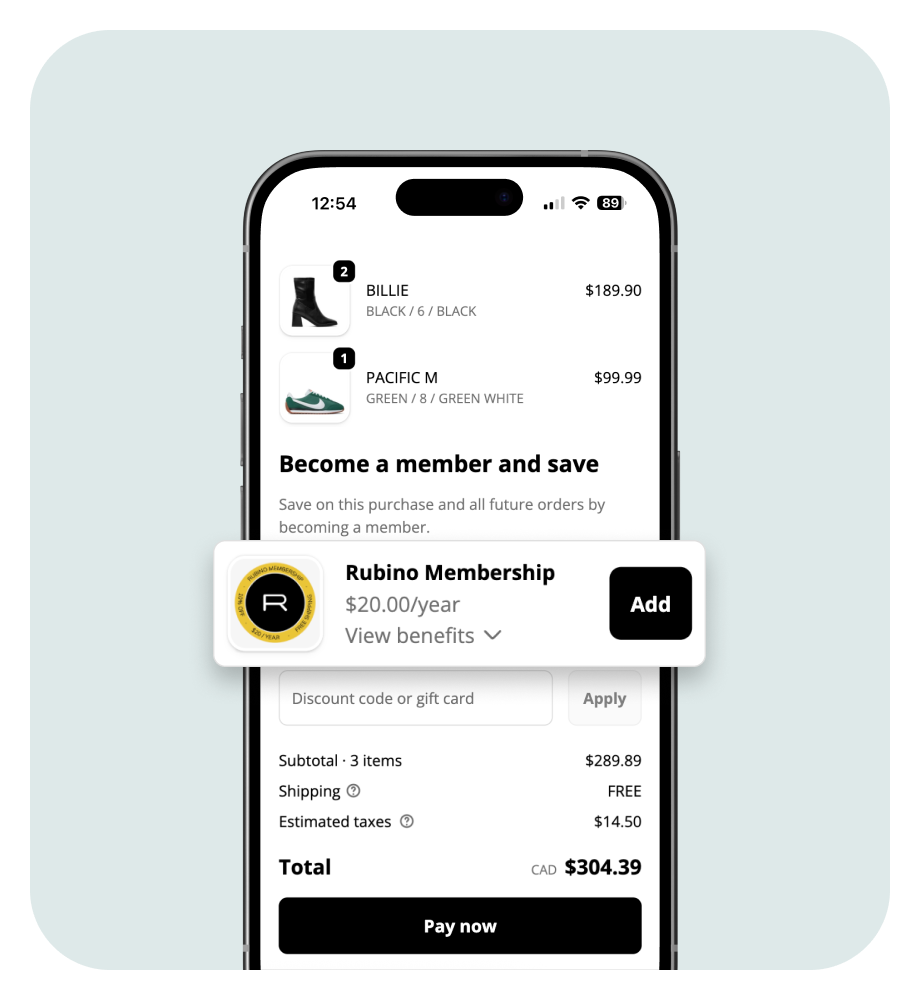
3. Paid Memberships With a Checkout Upsell: A one-click upsell at checkout applies member benefits to the same order, which is how Rubino earns about 30% of its revenue from paid members (2026).
Pricing (as of 19 November 2026)
Love Loyalty has a free plan for up to 150 orders. Professional is $12/month for 500 orders, and Growth is $79/month for 2,000 orders and includes VIP tiers, paid memberships, B2B programs, wallet passes and free migration. Plus is $399/month for unlimited orders, with checkout extensions, API access, founder-led onboarding and on-demand development.
Pro Tip: Start With Points, Then Build Up
If you're unsure where to begin, don't feel pressured to launch every loyalty feature at once. Start with points and referrals, see how customers respond, then layer on more as you learn who your best customers are.
How to Do It: Launch points on the product page and redemption in the cart first. Use the app's analytics to spot your most frequent buyers, then add VIP tiers for top spenders and a paid membership for the customers who already order most often.
The best loyalty app can turn your Shopify store into a place customers come back to again and again. It's not just about picking the app with the longest feature list. It's about choosing the one that fits your goals, your order volume and your brand.
Take your time to compare apps, check what each plan includes, and focus on the experience your customers see. Once you've found the right fit, you can watch repeat orders grow and build stronger, lasting relationships with your customers.